
A maintenance record should explain what was reported, when it was noticed and what happened next. A message that says only “the sink is leaking” may be enough to raise the issue, but it will not preserve the condition, urgency or sequence of decisions if questions arise later.
Begin with a factual description and useful evidence. Record the property, room, date, visible symptoms and any immediate steps taken to limit damage. Add clear photographs or video when they help, but avoid collecting personal information or unrelated parts of the home. Urgent risks involving water, electricity, gas or safety should follow the emergency process required by the lease and local rules rather than waiting for an app workflow.
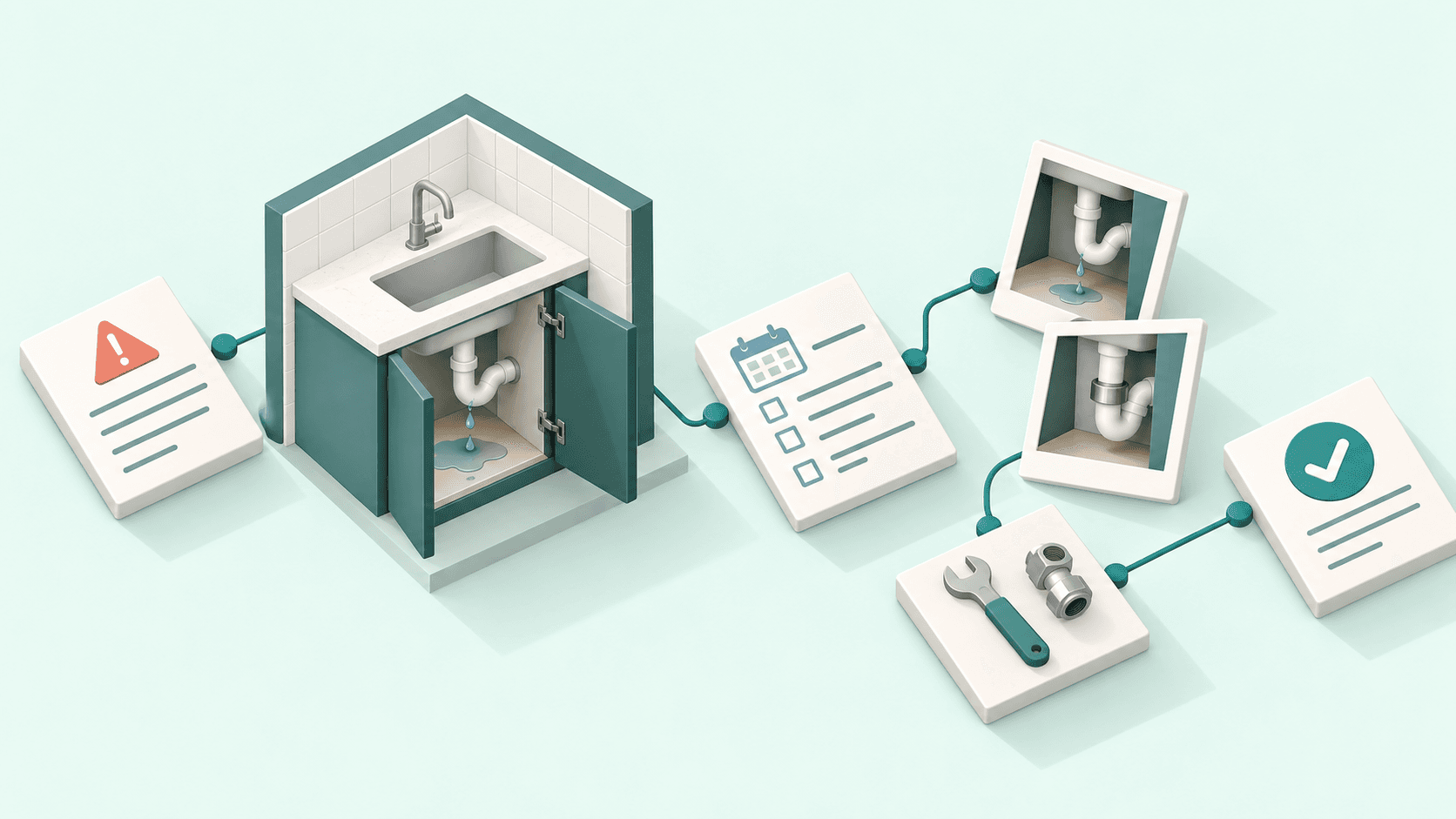
Keep every status change connected to the original request. Note when the landlord reviewed it, whether access was arranged, who was assigned and when the repair was expected. If the plan changes, add the new information without erasing the earlier update. That sequence helps both sides understand delays and decisions without reconstructing them from separate message threads.
After the work, record what was repaired and attach the relevant completion evidence, invoice or contractor note when appropriate. The tenant should have a chance to confirm whether the reported problem appears resolved or explain what remains. Confirmation records an observed outcome. It does not transfer legal responsibility or prevent a later issue from being reported.
A complete maintenance history makes recurring problems easier to recognise and gives future inspections better context. Tensu can organise the report, evidence and resolution trail, but it does not diagnose defects, select contractors or determine whether either party has met a legal obligation.